
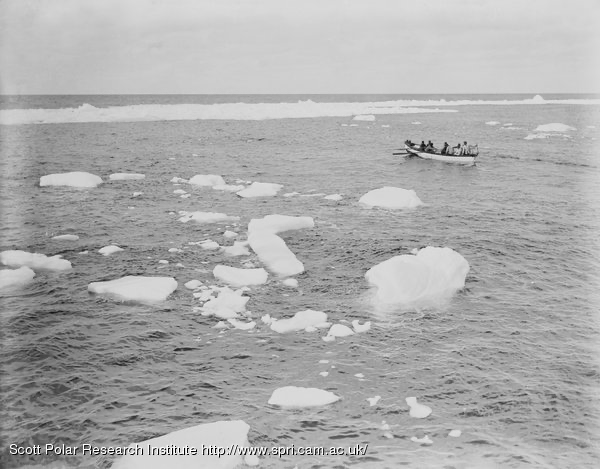
“The pram going off to Cape Crozier”, 3 January 1911. Photo credit: SPRI.
I want to begin this post by saying I really enjoyed Robert Ryan’s Death on the Ice. It’s well written, certain scenes have truly breathtaking cinematic timing, and it’s meticulously researched. I recommend reading it. However, it does provide a perfect example of the phenomenon I want to address with this post. So before I talk about that phenomenon, I just want to be clear that the book is good and I think people should read it!
This post is about what can be lost or hidden in language, and the ways we can misunderstand meaning depending on our frames of reference.
When I was first reading Scott’s diary from the Terra Nova expedition, I had a little chuckle to myself when I came across a certain passage. It is January 3, 1911. The Terra Nova has just reached Cape Crozier and Scott and some others attempt to reach shore:
Meanwhile, one of the whale boats was lowered and Wilson, Griffith Taylor, Priestley, Evans, and I were pulled towards the shore. The after-guard are so keen that the proper boat’s crew was displaced and the oars manned by Oates, Atkinson, and Cherry-Garrard, the latter catching several crabs.
Robert Falcon Scott, 3 January 1911 diary entry [emphasis mine]
Scott and his overenthusiastic team of volunteer-officer-rowers were ultimately unable to land, due to the swell, and Cape Crozier had to be abandoned as a possible base camp for the expedition. But this, of course, is not what made me chuckle. What amused me was that Scott called Cherry bad at rowing. Did you notice? It’s hard to, because it is communicated using sport-specific jargon. I only know it because I rowed in high school.
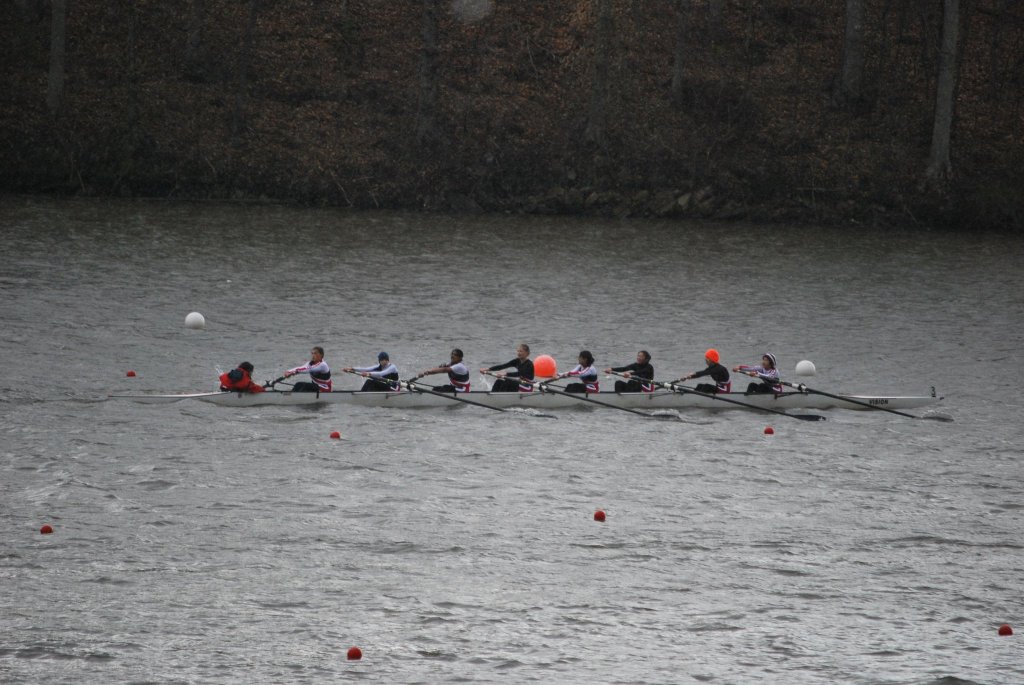
In rowing, “catching a crab” refers to the blade of your oar hitting the water at the wrong angle and getting sucked under. It can be scary—it feels as if a giant being underwater has grabbed your oar and pulled it down, and it happens in the blink of an eye. Often the grip (the part of the oar you hold) will come flying back at you as the oar swings around parallel with the boat itself, so you have to duck backward to avoid getting hit in the head. Sometimes, you even get ejected from the boat, such is the force of striking the water wrong when the boat has momentum! Here is a great video of what catching a crab looks like. It’ll be obvious when it happens, but keep an eye on the four-seat (the rower fourth from left). (This rower makes a truly impressive recovery!)
So Scott says first that he has less-experienced rowers (“the proper boat’s crew was displaced”) and then that of his three new rowers, Cherry-Garrard (“the latter”) caught several crabs. In actuality, Cherry was not a shabby oarsman: he had rowed at Oxford, and his eight even won the Grand Challenge Cup at the Henley Royal Regatta his final year1. What he lacked was ocean rowing experience: his practice on the placid Isis absolutely would not have prepared him for the sea in a heavy swell. The worst rowing conditions he would likely have faced on the Isis couldn’t have been worse than the hail and sleet and wind in the photograph above, and that thankfully did not involve big waves. It’s no surprise he caught crabs rowing towards Cape Crozier!
Reading this entry, I wondered how many people understood what “the latter catching several crabs” meant. In the absence of a working knowledge of rowing terminology, I could easily see someone thinking Cherry was dropping a crab pot and catching literal crabs, perhaps as specimens. He was the assistant zoologist, after all. In light of this possible misread, the true meaning almost felt like an inside joke.
A few months later, I started reading Death on the Ice. It’s an ambitious novelisation of Scott’s expeditions, and is clearly based on a strong research foundation. Throughout, I kept recognising sources Ryan must have consulted, and was very impressed with the thoroughness of his effort. There were a few characterisation choices I’d have made differently, but overall it was strong stuff. Then I got to the part where the whale boat rows out to Cape Crozier:
This was Cape Crozier, the place they’d tolerated twenty days stuck in the pack to reach. It didn’t look worth the effort.
Death on the Ice by Robert Ryan, page 308
“I’ve got a crab.” Cherry and his trawling net. “No, two.” Then a screech. “Ow. They are rum little nippers.”
Oates laughed as Cherry sucked his thumb. His glasses were misted and salted from the spray and he looked like a schoolboy who had caught his finger in a desk.
I am an anxious person by nature. When I come across something that contradicts my knowledge, my first thought is that I must be the one who is in the wrong. Therefore, seeing this, I immediately went and compared to Scott’s diary again. Could I have misunderstood? Was Cherry simply collecting crab specimens? I had been pretty sure he wasn’t, but it was worth another look. Rereading Scott’s entry, it seemed obvious the “catching several crabs” was linked to the actions of the rowers at the beginning of the sentence. It would be odd for a sudden mention of scientific specimens to come up when describing rowing to shore. Besides, I didn’t think I’d heard of trawling happening from a whale boat. Still, my curiosity had been piqued. I had to get to the bottom of this crazy rabbit hole.
So, I checked. First I googled “crabs antarctica” and found that crabs are extremely rare in Antarctica—most of the results were about a “king crab invasion” in recent years as global warming makes Antarctic waters palatable to that species. So that immediately reduced the chances that Cherry could have been catching literal crabs.
But to be sure, I went to the British Antarctic (“Terra Nova”) Expedition Natural History Report, Zoology, Vol III on Internet Archive and found the section No. 2 Crustacea. This was the official science report, and would list all samples obtained. I checked all Decapoda samples (the order of crustaceans that includes crabs, as well as lobsters, crayfish, and shrimp). Almost all crabs were acquired while the Terra Nova was in New Zealand, or other warmer waters. Of the three species of Decapoda found in Antarctic waters, one was found in “the stomach of an albatross” and the other two came from field stations, the visitation dates of which do not match 3 January 19112. As well, Wilson’s very thorough diary entry for that same date does not mention a trawl net3. Finally, I double-checked the origin of the rowing term “catching a crab”, and found it dates at least to the 1780s, so Scott can certainly have plausibly used it in that context in 19114.
Q.E.D.: Cherry made a poor showing of rowing that day, there were no crustaceans, Ryan misinterpreted that section of Scott’s diary in his research, and my soundness of mind is perhaps a bit questionable for even embarking on that little research journey. But my larger point is this: any one of us could make that sort of mistake while reading historical documents. I know I have, and I’m sure I will again. Perhaps there are some times I’ve done it that I’m not yet aware of. It happens all the time.
It all comes down to language. “Catching a crab” is a niche term from a niche sport that has another, much more obvious meaning to most people. This makes it less accessible and easier to confuse. The same result can happen from changes to the meaning of language over time; for example, the word “pathetic” in the 1910s would have meant more “evoking pathos”, that is, eliciting pity. It did not have the negative connotation it does today, it would mean something more akin to I feel for you. I’ve come across several primary source quotes in polar history that come off extremely uncharitable if read with the modern meaning in mind, and I wonder how often they are misinterpreted.
Here’s a newspaper article in which Roald Amundsen calls his gift from Frederick Cook “pathetic”:
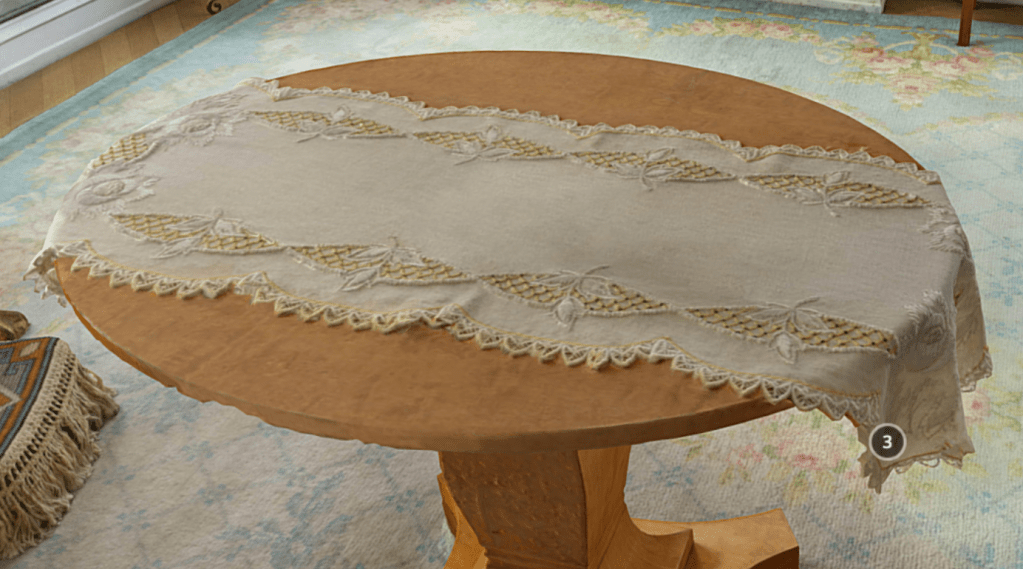
Captain Amundsen is stopping at the Waldorf. Last night when he entered his room there he found a small package and when he looked at its contents his voice broke with emotion. It was an embroidered linen table cover, about 4 feet long and 15 inches wide.
“Amundsen Back From Lecture Tour”, New York Times, 4 May 1926 [emphasis mine]
“Well, and whom do you think this is from?” he asked. “The man I once thought was going to discover both the North and South Poles. Now, poor fellow, he is in Leavenworth Prison. And he did every stitch of it with his own hands. It is pathetic. Yes, it is from Dr. Cook. I am more touched by this gift than by almost anything that has happened to me in a long time.”
And here is another example from the diary of Ernest Joyce, a member of the Imperial Trans-Antarctic Expedition’s Ross Sea Party, upon finding a note Cherry had left for Scott several years later:
I decided to investigate. Found the sledge buried 8 feet, came across an ice pick, with a note attached to it. On opening it, found it to be from Cherry Garrard, dated March 19th, 1912.
Ernest Joyce, The South Polar Trail, 26 October 1915 diary entry [emphasis mine]
“Dear Sir,
We leave here this morning with the dogs for Hut Point. We have laid no depot on the way in. I have not been able to leave a note before.
Yours sincerely,
Cherry Garrard”
This letter is pathetic. Three days previous to this being written Captain Oates had staggered out of his tent to his death.
With the modern meaning of “pathetic” in mind, both these statements look almost comically mean-spirited. However, at a second glance it becomes clear from the surrounding text that Amundsen and Joyce were emotionally affected by the embroidery and letter, respectively. They were not insulting Cook or Cherry. They felt for them and their pitiable circumstances.
There are many, many times I’ve come across a phrase in Edwardian writing where I just have no idea what they’re on about, and google is usually my friend in those cases. These times are usually not the problems, because it’s clear to me that I’m missing something and ought to further investigate before drawing conclusions. Instead, the tricksy times are the times when we think we understand, because language, while amazing, can be obfuscating in its double meanings5. That’s how we end up catching crabs6.
It can and does happen to all of us, and it always pays to double-check. Perhaps…not with quite as elaborate a rabbit warren as I constructed, but, well. You get the idea!
- Cherry, Sara Wheeler ↩︎
- British Antarctic (“Terra Nova”) Expedition Natural History Report, Zoology, Vol III ↩︎
- Diary of the “Terra Nova” Expedition to the Antarctic, 1910-12, ed. HGR King ↩︎
- https://www.phrases.org.uk/meanings/to-catch-a-crab.html ↩︎
- This also happens with shared names. I’m certain many people have been confused by coming across a “Scott” dusting the wardroom in various Discovery diaries who is actually the marine Gilbert Scott, not Robert Falcon! ↩︎
- Mmm, now I want crabcakes with Old Bay…. ↩︎
 Glossopteris
Leave a comment